From Stand-Up to Utopia:In Conversation with Gavin Lilley
When you meet Gavin Lilley, you’re struck by two things immediately: warmth and precision. He is funny, yes — but beneath the humour is a thinker. A teacher. A strategist. And someone who has been quietly building towards something bigger for years.
This conversation forms part of WriteAccess’s ongoing exploration of Deaf-centred creative leadership — and the early thinking behind Gavin’s developing theatre project, currently titled Utopia (working title).
Growing Up Between Worlds
Gavin describes his childhood as a kind of double vision.
“I always felt like I was slightly outside the world I was in. Not just because I’m deaf. ADHD as well — my brain was always moving, always thinking.”
He was a happy child — imaginative, mischievous, always creating stories. At school he would gather people around him and spin elaborate narratives just to watch them laugh.
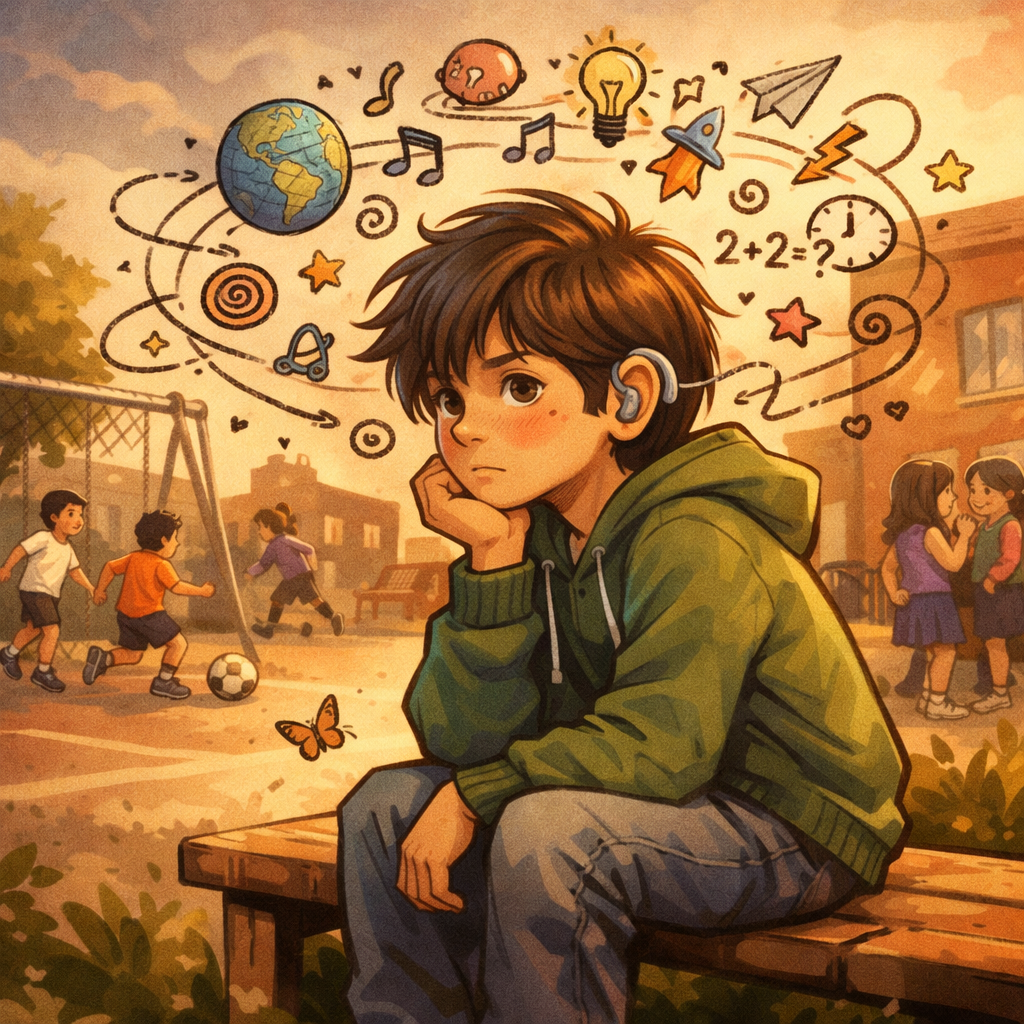
He attended Mary Hare School, an oralist boarding school. Performance roles often went to those who excelled in speech. Gavin did not.
But then something shifted.
Mr Bean, Silence and Power
He performed a silent Mr Bean piece — physical, gestural, expressive. No spoken words. No speech hierarchy.
It was a turning point.
“It was fabulous. No spoken word involved. It was all gesture and timing. That increased my confidence.”

Silent comedy created a level playing field. Hearing and Deaf audiences could meet in the same space. The humour didn’t depend on translation. It lived in rhythm, in visual intelligence.
That principle — accessibility through design, not addition — still underpins his thinking today.
Learning Hearing Humour
Gavin grew up with two hearing sisters. They teased, debated, dissected jokes.
“Why is that funny? They’d explain it. Luckily I had good literacy, so I could work it out.”
He devoured British comedy — Live at the Apollo, Mock the Week. Some Deaf audiences didn’t always “get it”. Gavin did.
He began to understand that he could bridge worlds.
“I felt like I could combine Deaf and hearing humour. That became part of my career later on.”
This ability — to translate culturally without diluting — is one of his great strengths.
Starting Stand-Up at 30
Unlike many comics, Gavin didn’t start young. He built a career first — studying BSL linguistics, working a 9–5, teaching.
Then came a benefit night at London Deaf Club, Green Lane.
“My friends said, ‘You’re funny, do stand-up.’ I thought — stand-up? In sign language? Terrifying.”
He did it anyway.
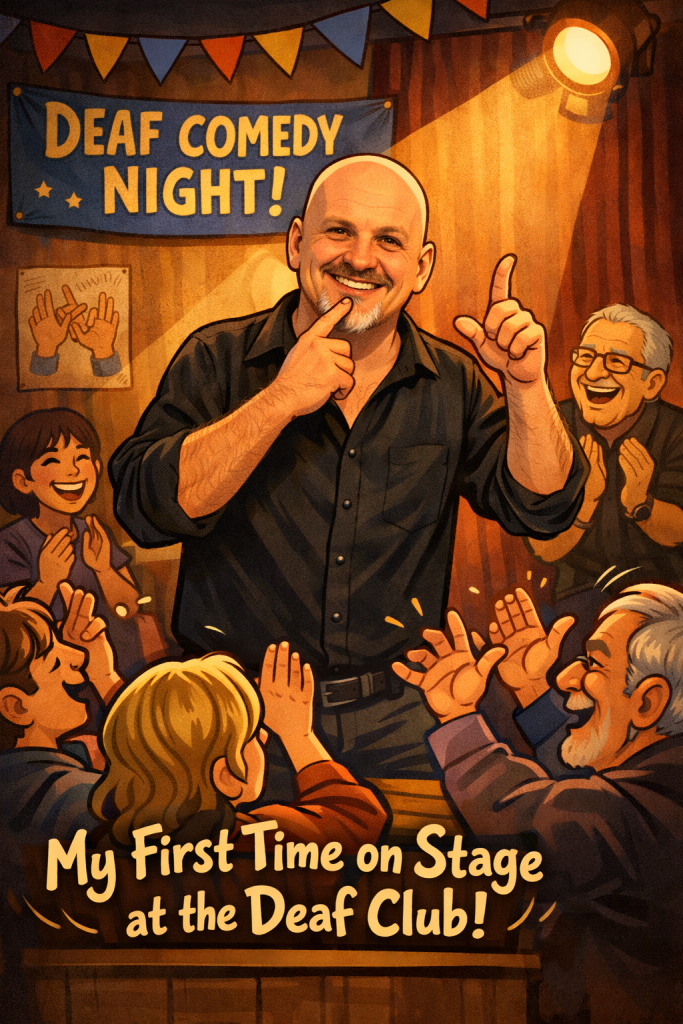
One night turned into a solo set. Solo sets turned into touring. He performed across Europe, using International Sign, drawing on early exposure to the Deaf international community through his father’s involvement in Deaf sport.
“Even hearing people who couldn’t sign would say — it’s easy to follow. You’re so visual.”
From the start, he was thinking internationally.
Beyond the Deaf Circuit
Now 44, Gavin feels a shift.
“I’ve reached a point where I want to expand beyond Deaf-only audiences. I’d rather perform to a fully hearing audience than a fully Deaf one.”
This isn’t rejection of community. It’s strategy.
He is also a teacher. He believes in social change.
“When I perform to a hearing audience, I’m teaching them. They go home, tell their family, their colleagues. That’s how change spreads.”
For Gavin, comedy isn’t just entertainment. It’s pedagogy. It’s cultural diplomacy.
This thinking has shaped the early development of his theatre R&D project — currently titled Utopia.
Why “Utopia”?
Gavin is a self-confessed Trekkie.
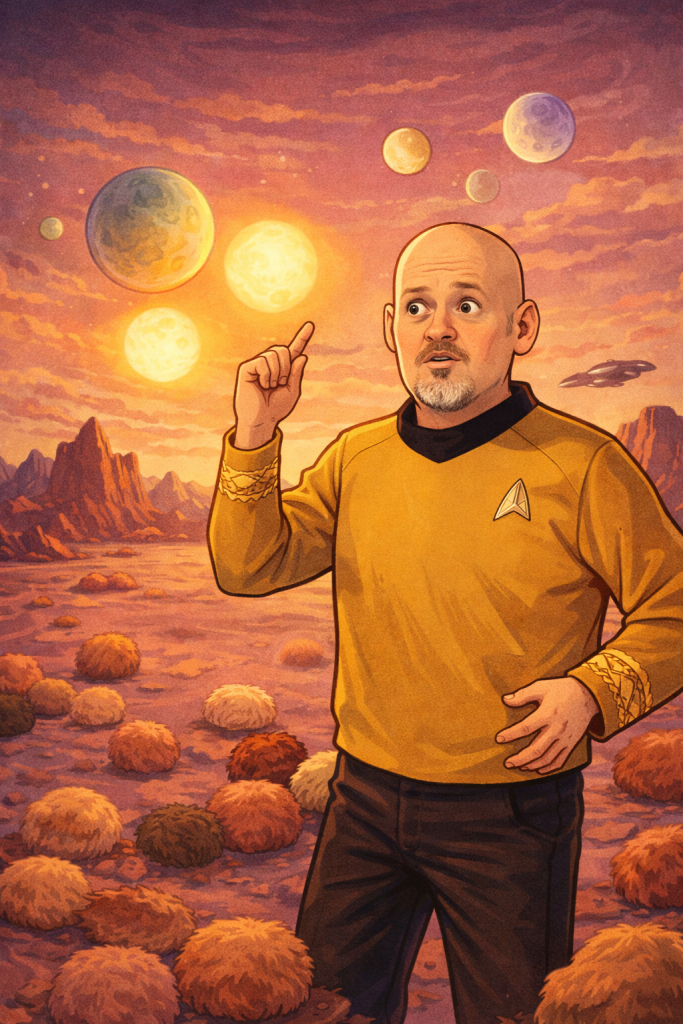
Star Trek imagined a future built on cooperation, respect, and a Prime Directive: do not interfere, do not dominate, respect difference.
Created by Gene Roddenberry, it proposed a world where cultural difference was not erased but held with integrity.
“That’s Utopia. That’s what it is. Respecting difference.”
For Gavin, Deaf culture already models elements of that future. The question is how to embody that vision theatrically.
From Stand-Up to Theatre
This is where the R&D begins.
Stand-up is direct. Immediate. Performer to audience.
Theatre invites architecture: space, light, silence, rhythm, collaboration.
We began asking new questions:
- What is Gavin’s creative process?
- How does he construct a joke visually?
- What happens when interpreters stop voicing and silence becomes shared?
- Can physical dramaturgy replace spoken explanation?
He realised something important:
“I want to remain true to myself. I don’t want to become a character.”
Authenticity is central. He cites comics like Joe Lycett — performers whose stage persona is an extension of self, not disguise.
But the R&D offers challenge too. What might he discover if he pushes beyond what feels safe?
Visual Dramaturgy in Action
In his current stand-up, Gavin sometimes deliberately stops interpretation at the punchline. He signs something visually obvious — no voiceover needed. Hearing audiences “get it” through the image.
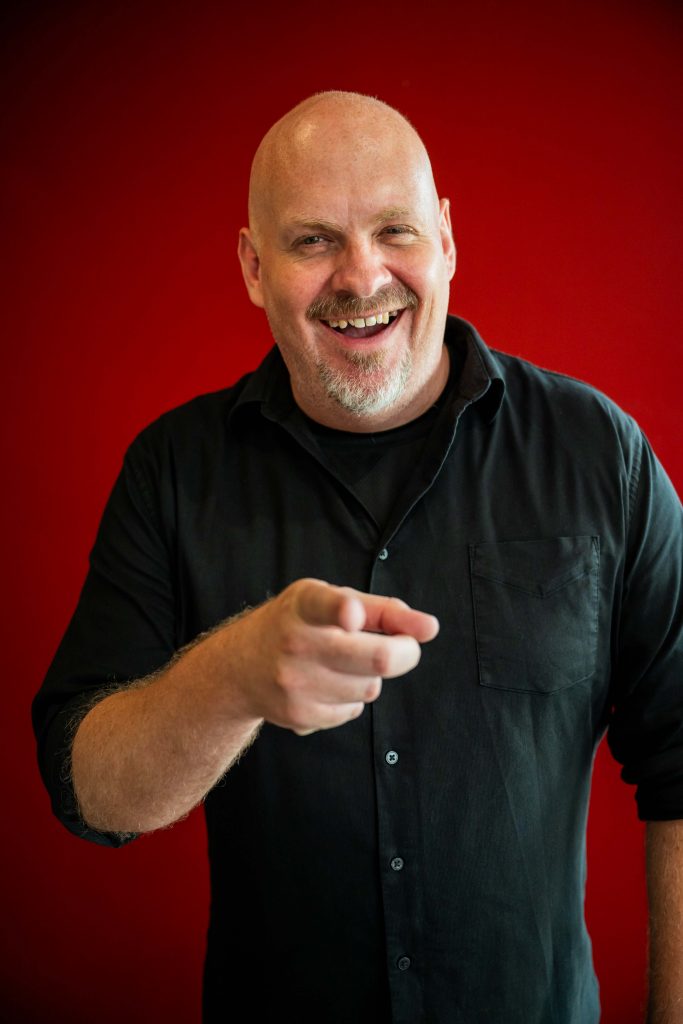
That small device contains a larger theatrical possibility.
What if:
- Light becomes language?
- Silence becomes structural?
- The audience experiences moments of shared non-verbal understanding?
This is not about adding access. It’s about designing from Deaf visual intelligence.
Structure for ADHD, Structure for Growth
Gavin laughs about needing parameters.
“When you tell an ADHD person, ‘You have free rein,’ they go — ahhh!”
So the R&D will be structured:
- Who he is now.
- What he wants to become.
- What he will test in studio.
- What impact it will have.
- He will have a question to interrogate the R&D and keep on track
This clarity unlocks creativity rather than restricting it.
Question
My key artistic question to take into the R&D is, what would the world look like if people like me were centred rather than accommodated, and what does that reveal about the world we actually live in.
Gavin Lilley is circling something really sharp here — and it is anticipated that audiences will feel the tension and be unsettled.
Accommodation suggests a world that remains unchanged, offering access without surrendering control. To be centred, by contrast, would mean reshaping the world itself — not adjusting people to fit it, but allowing it to be remade through their experience.
The Bigger Picture
Gavin believes British humour travels. He has proven that in Europe. But the ambition now is scale: arts festivals, theatre houses, cross-border touring.
Not as a novelty act. Not as a Deaf slot.
But as a British theatre maker whose visual language expands what comedy can be.
A Final Reflection
At one point in our conversation, Gavin said quietly:
“I feel like I haven’t unleashed my full potential.”
That is the heart of this work.
WriteAccess exists to support artists at precisely this moment — when experience, identity and ambition converge into something more structural.
Utopia is not just a show title. It is a provocation:
What would comedy look like if Deaf ways of seeing defined the stage from the outset?
We’re about to find out.
By WriteAccess CIC
Developing inclusive cultural leadership through structure, strategy and story.
If you’d like to follow the development of Gavin’s R&D journey — or explore collaboration — get in touch.